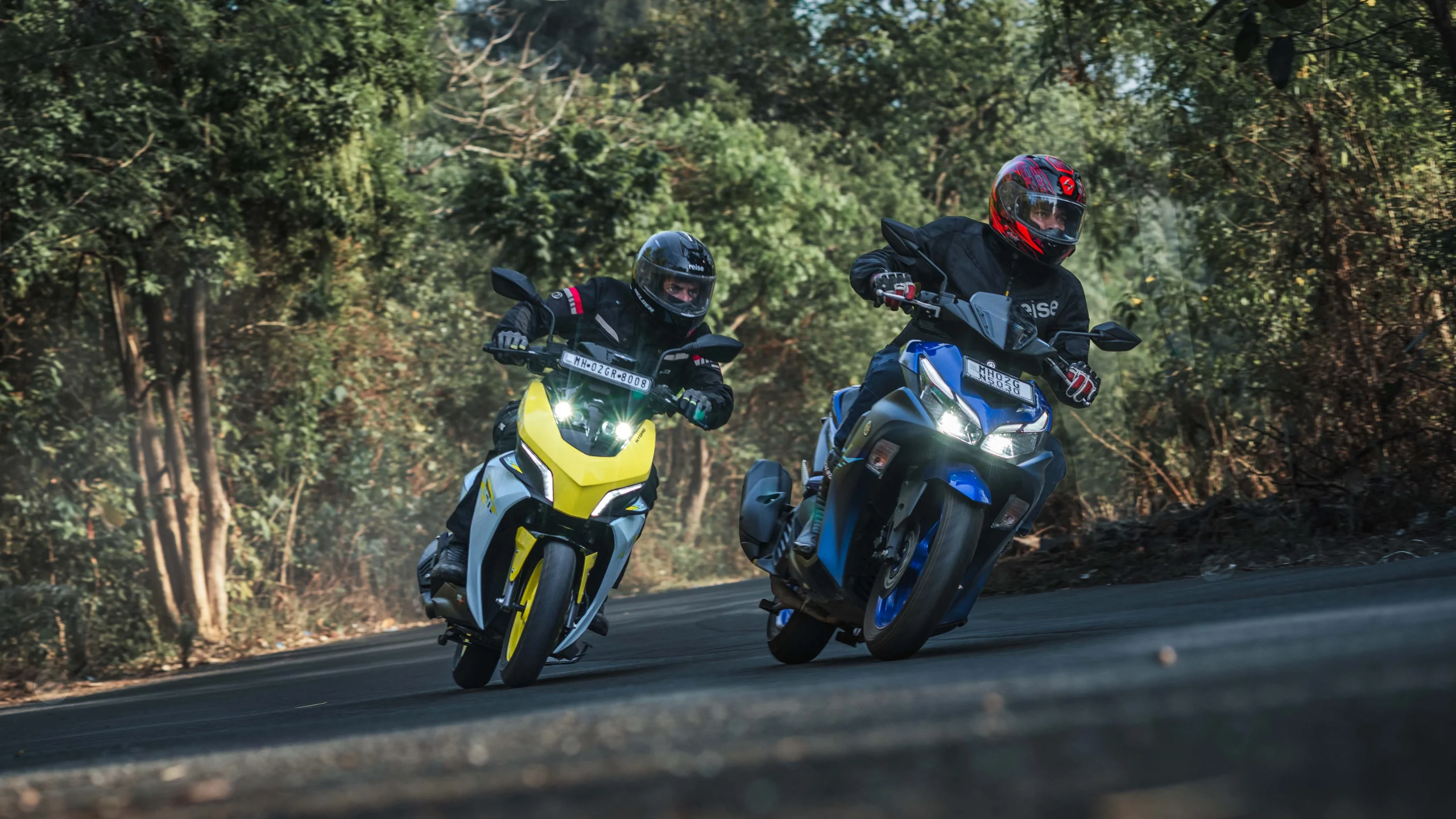
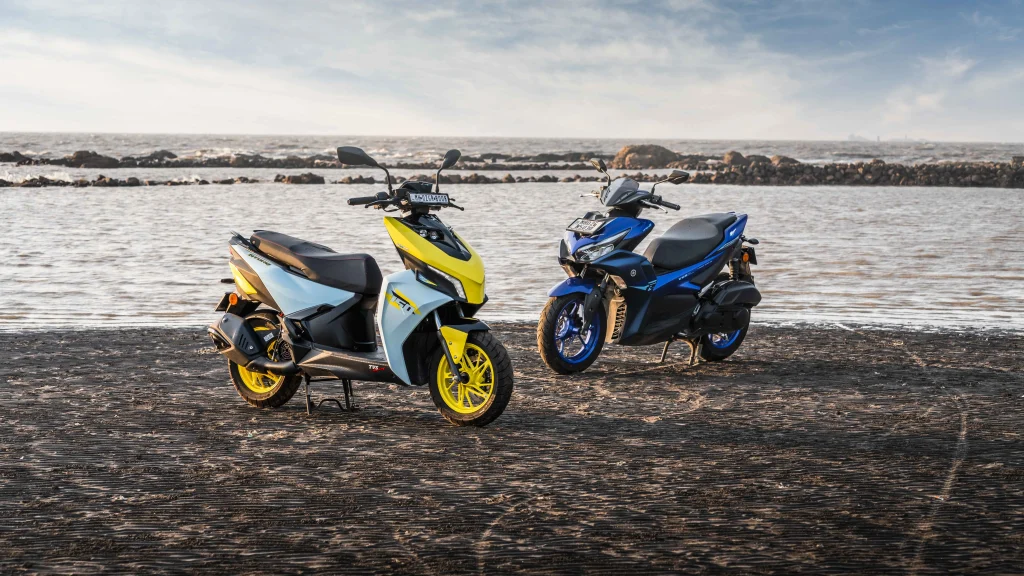
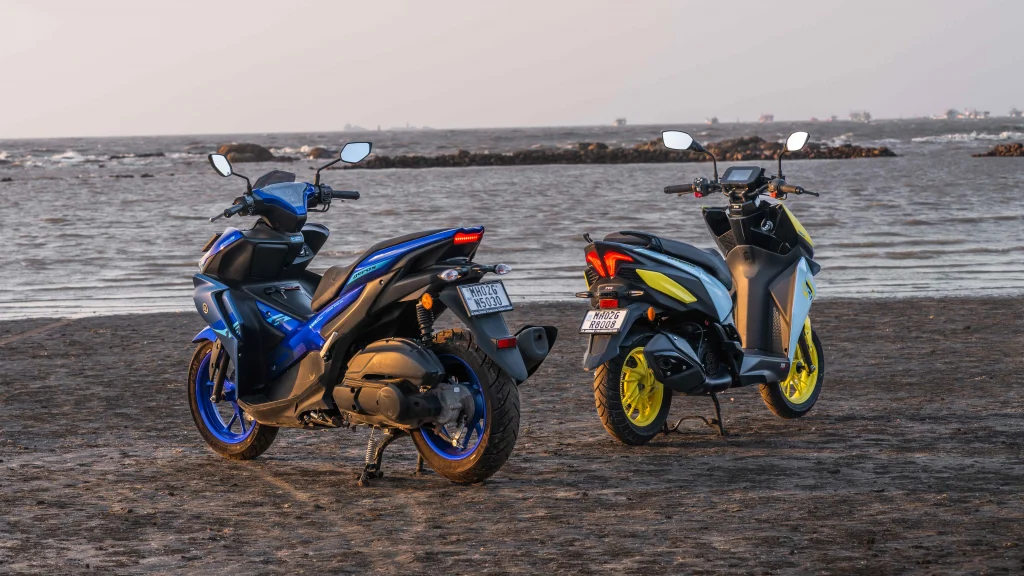
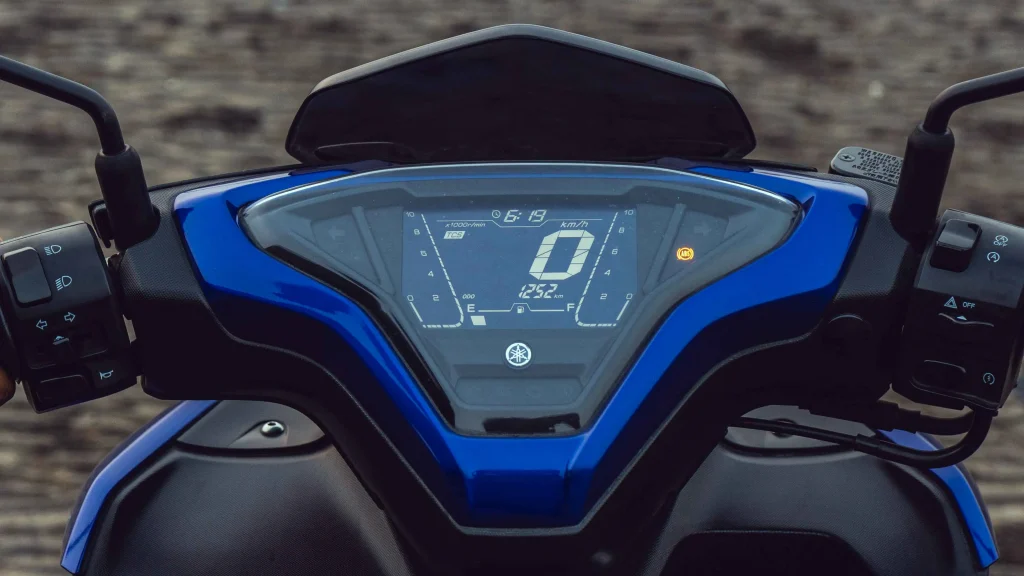
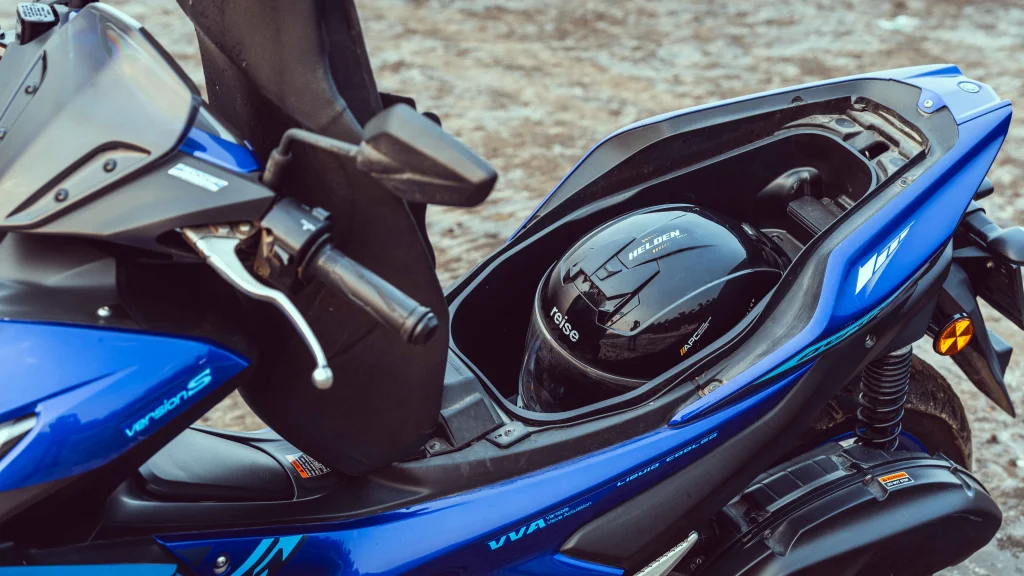
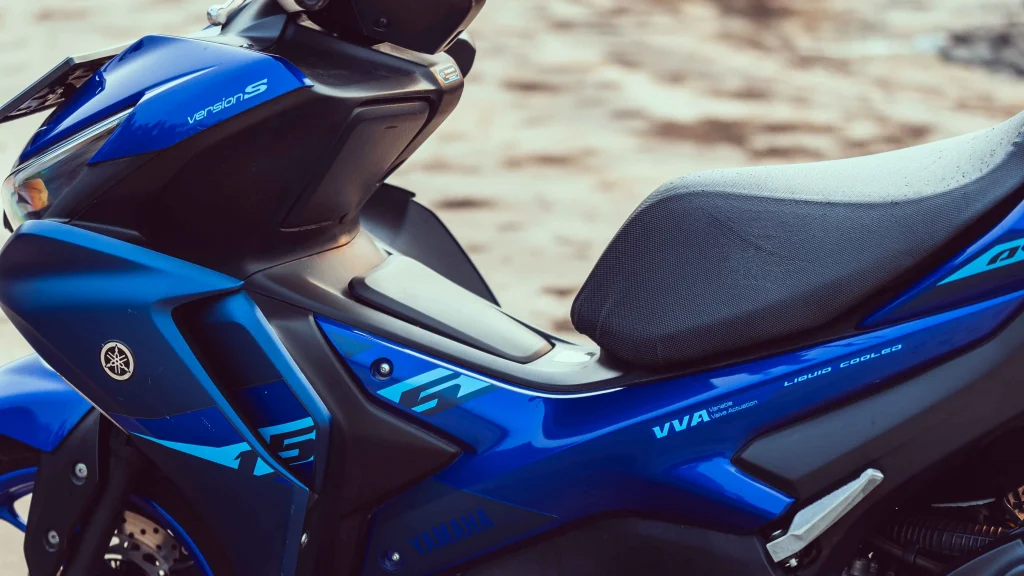
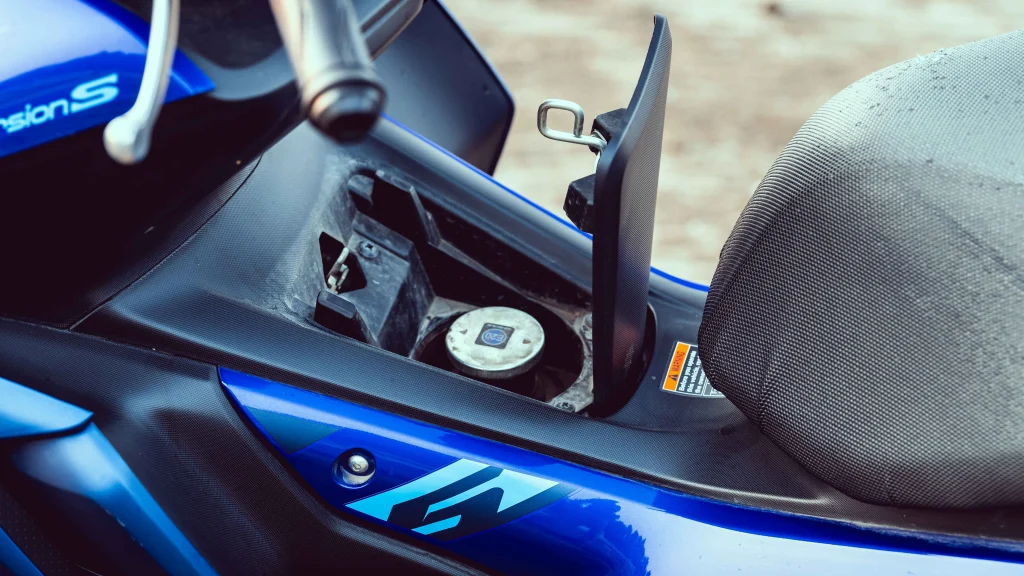
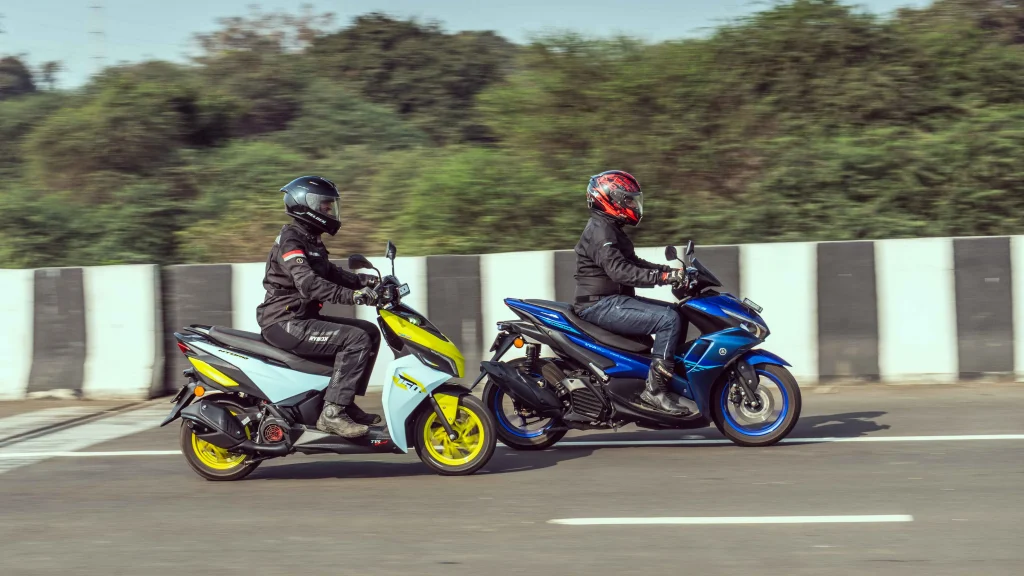
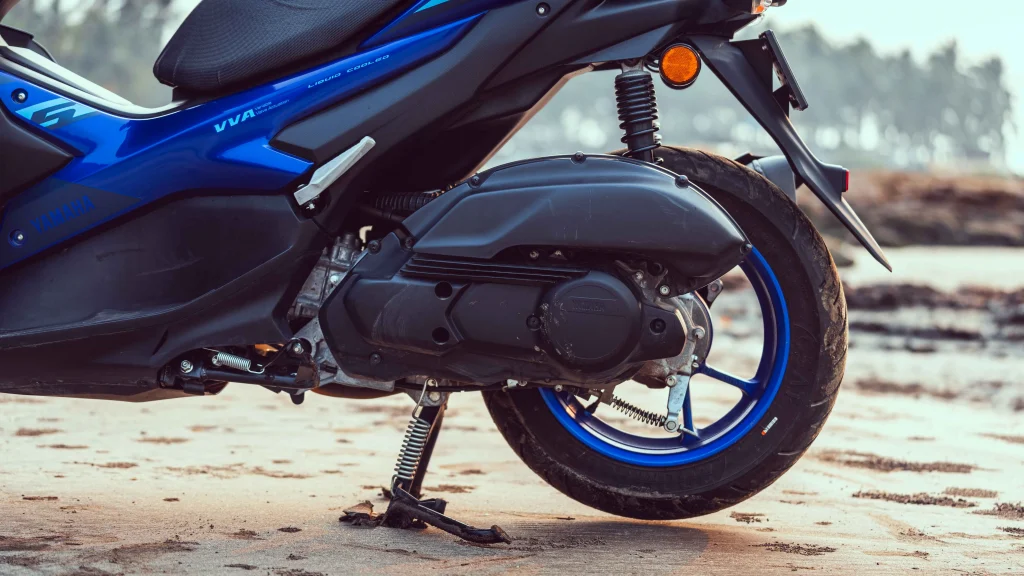
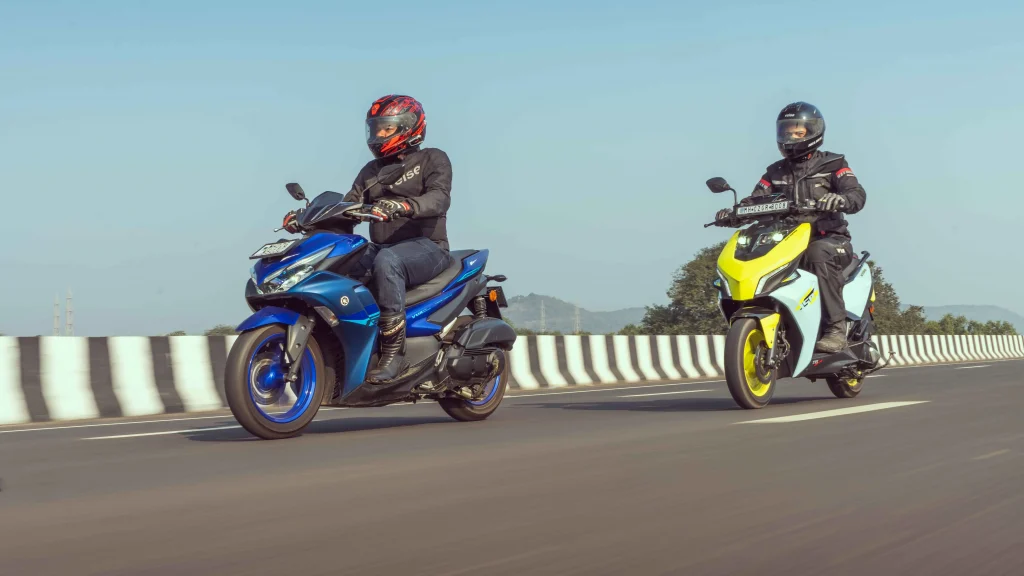
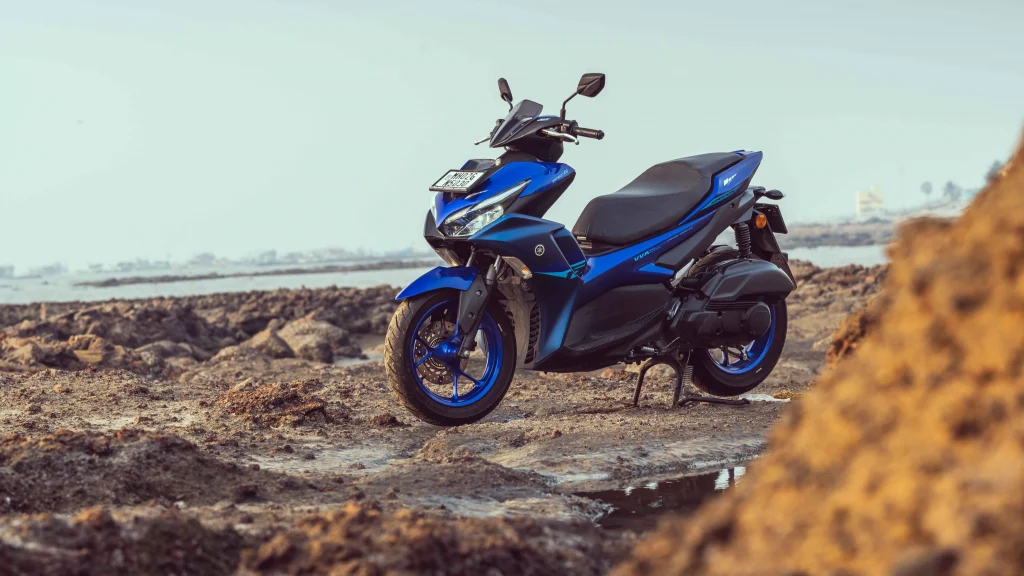
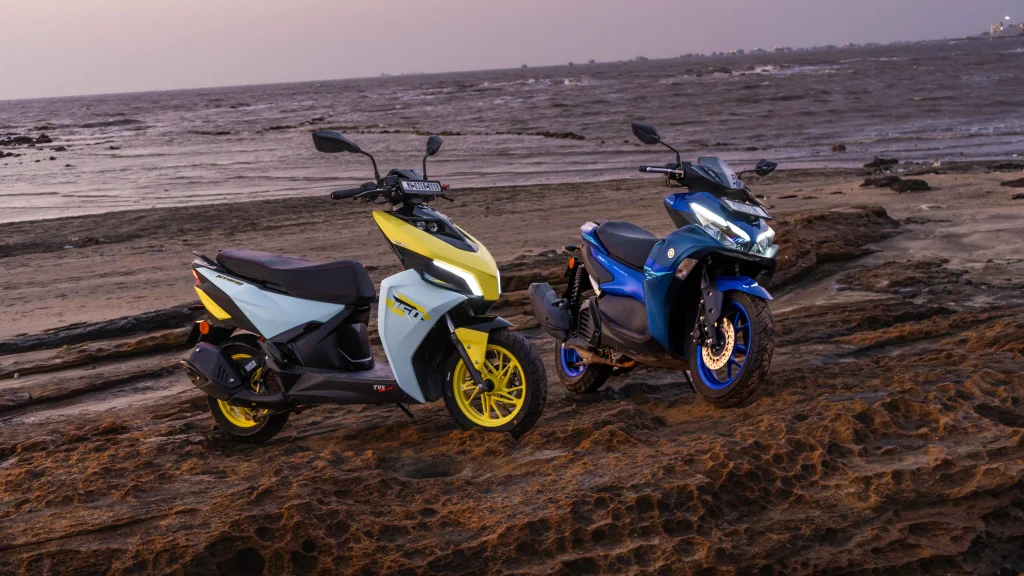
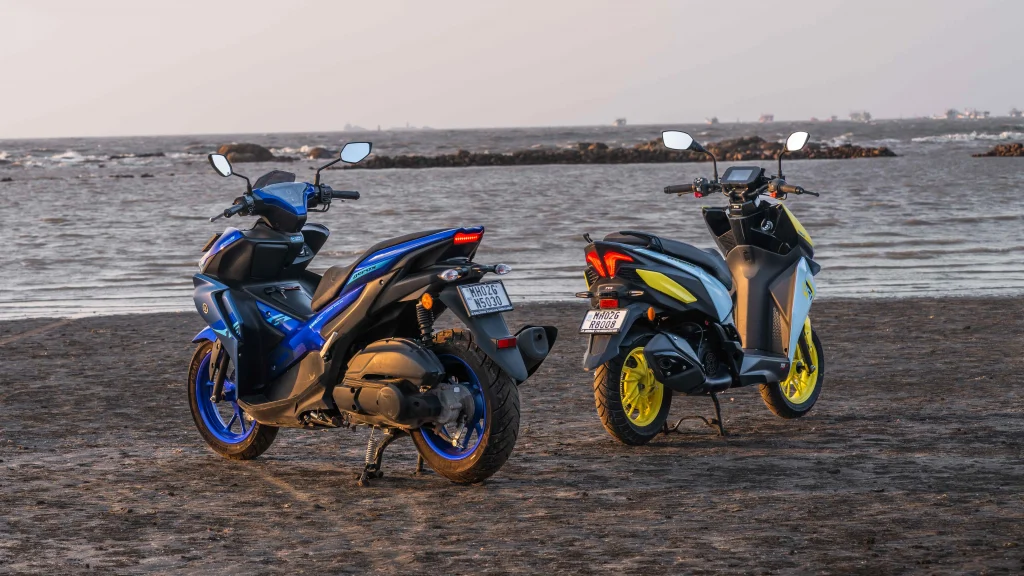
Despite producing more power and carrying additional weight, the Aerox can actually be the more fuel-efficient scooter of the two. In mixed riding conditions, it can return around 40–45 km/l, which is impressive for a performance-focused 155cc machine. A major contributor to this efficiency is Yamaha’s Variable Valve Actuation (VVA) technology, which optimises valve timing across the rev range to balance performance and fuel economy.
However, efficiency on the Aerox is closely tied to riding style. Ride it aggressively and fuel consumption rises quickly; ride it smoothly and the scooter rewards you with excellent economy.
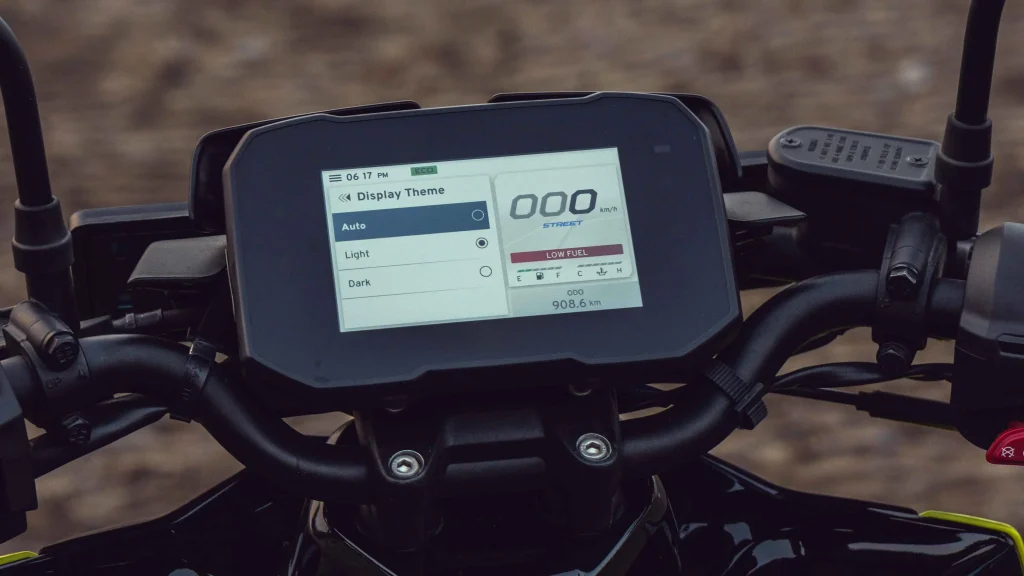
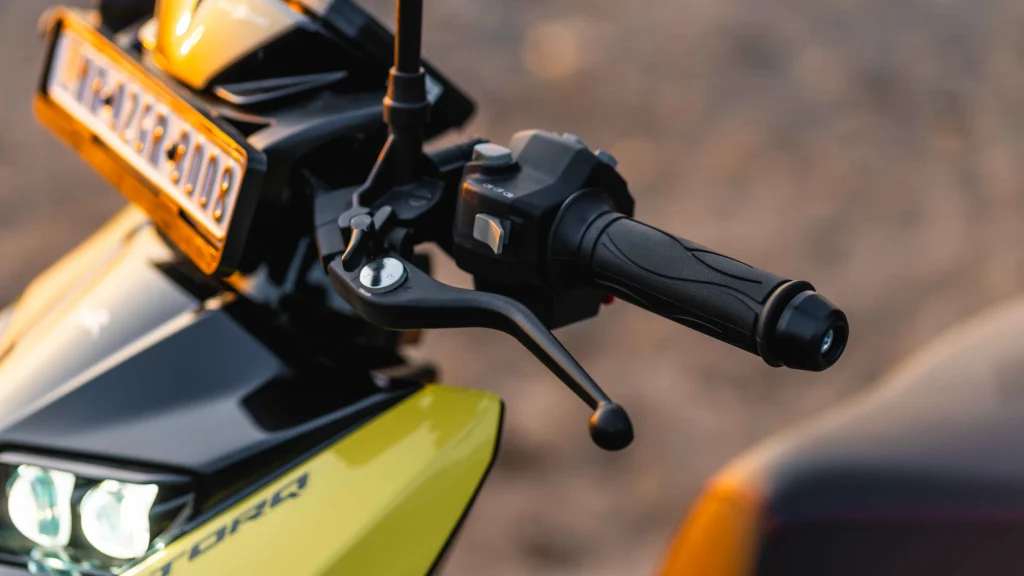
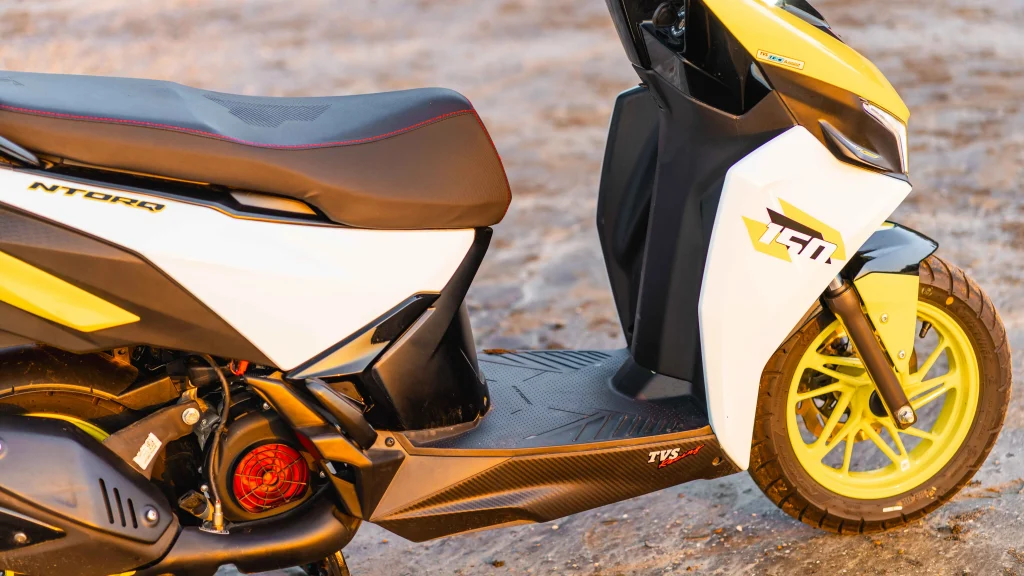
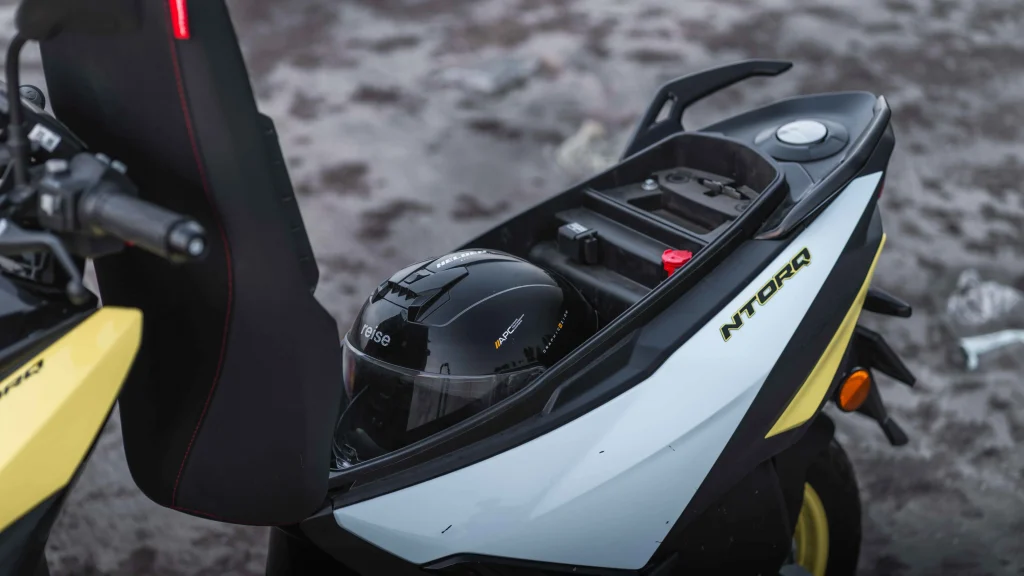
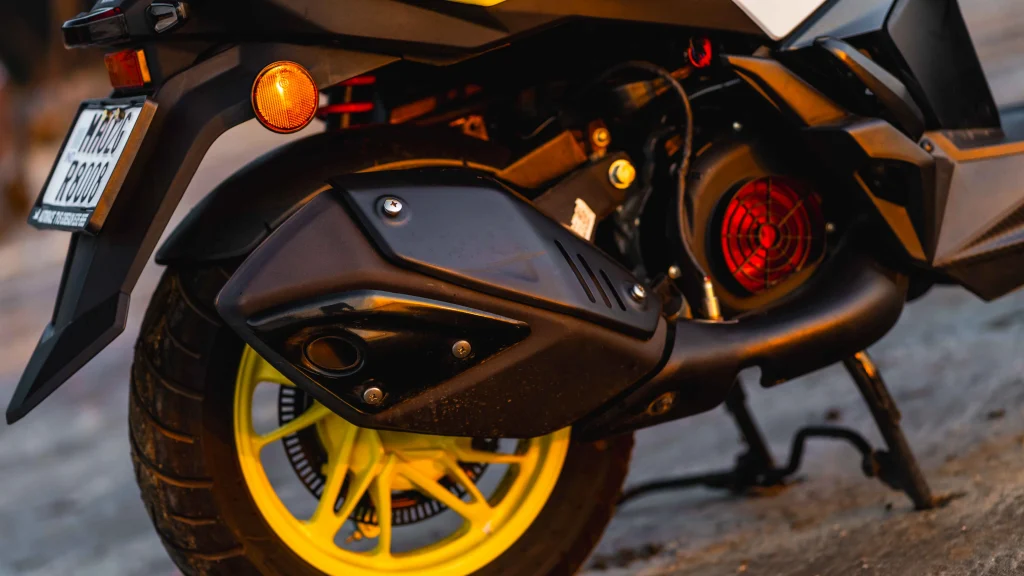
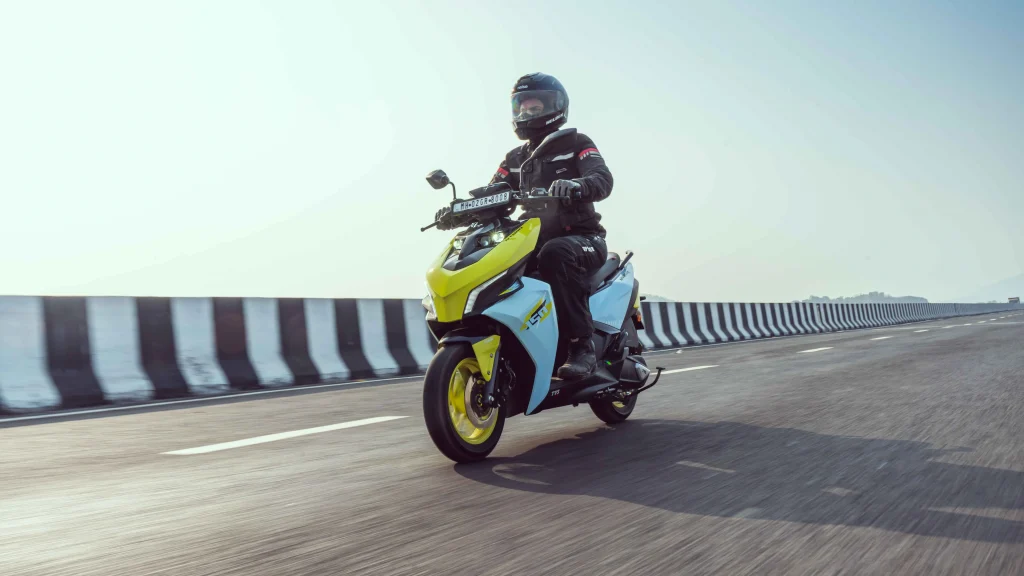
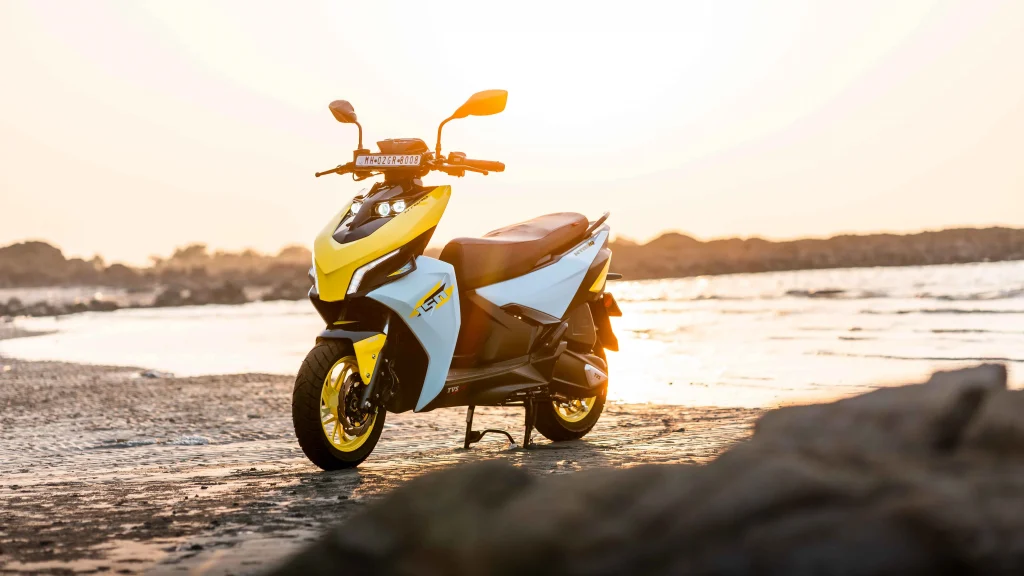
The Ntorq, on the other hand, typically delivers around 35–40 km/l in real-world usage. Its punchy throttle response and eager low-end torque encourage spirited riding, which can make it slightly thirstier despite its lower power output.
In dense city traffic, where frequent acceleration and braking are unavoidable, both scooters tend to settle into a similar real-world range of 35–40 km/l.
So while the Aerox has the potential to be more efficient on paper and in disciplined riding conditions, in everyday urban usage the difference between the two becomes minimal.